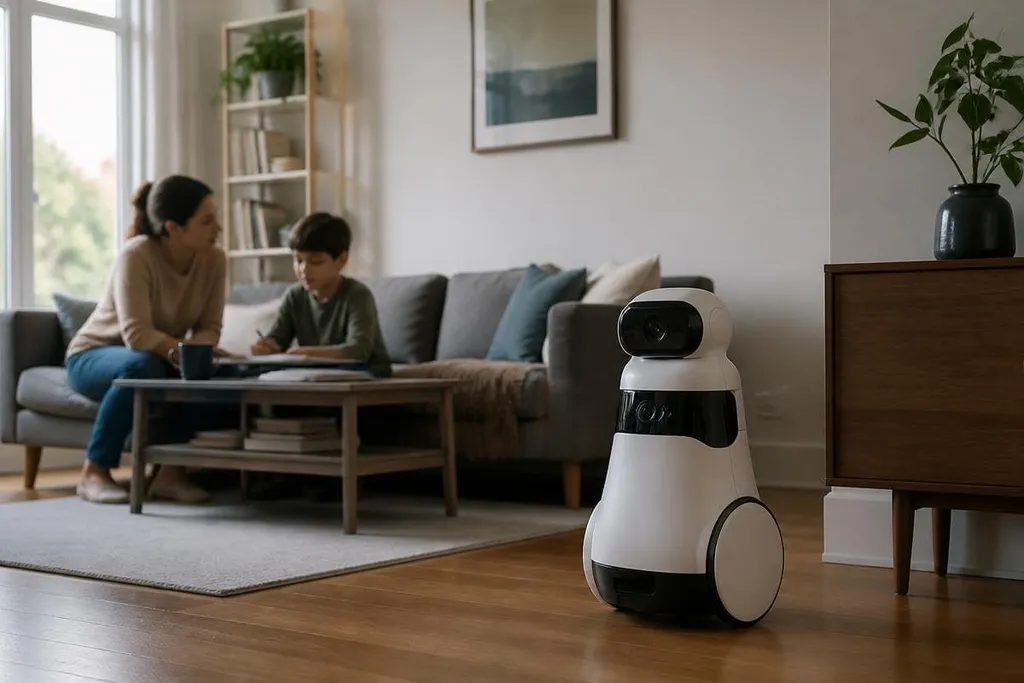
A home robot may need cameras, microphones, depth sensors, or location data to do its job. Those same tools can record details about people who never agreed to be part of the system.
- Sensors can collect faces, voices, room layouts, and movement patterns
- Privacy depends on what the robot stores, sends, and learns from that data
- A clear buying rule is to ask what works when the robot is offline
What a robot can learn
A camera can record a face or read text on a table. A microphone can pick up a private conversation even when nobody is speaking to the robot. Depth sensors can map walls, furniture, and the paths people take through a room.
Location data adds another layer. A delivery robot, security robot, or warehouse vehicle can log where a person stood and when they moved. Over time, those records may show work routines, visits, or periods when a home is empty.
Some systems also process biometric data. That means measurements linked to a person, such as a face pattern, voice pattern, or body movement. The robot may not need to save a name to create a record that can single someone out.
The robot is only part of the system
Privacy depends on the full path taken by the data. A robot may process a video feed on its own computer, send it to a company server, or use a phone app as the control point. Each path creates a different set of questions about access and storage.
A company may keep raw video, short clips, sensor maps, or records made from those files. A map of a home can reveal as much about daily life as a video, even if the video is deleted.
The useful question is not only what the robot sees. Ask what the company can rebuild from the records.
A privacy dispute becomes concrete when a robot records people at work or in a public place. Privacy reporting from Robot24.com can place the robot’s sensors, stored records, and data rules beside the product or trial. Consent gets harder when people are recorded without choosing to take part.
Consent gets difficult around robots
A person who buys a robot can agree to its data rules. Guests, visitors, cleaners, patients, students, or workers may have no practical way to refuse the same collection. A sign on a wall may explain that a camera is present, but it does not give someone a real choice if leaving means losing access to a home or job.
Workplaces add pressure. A mobile robot with cameras may help move goods while also recording staff, visitors, and nearby screens. If the system measures time near a workstation, managers may use that record to judge people, even if the robot was bought for stock movement.
Public spaces raise a different problem. A person can avoid a smart speaker at home, but avoiding every camera-equipped robot in a station, shop, or street may be impossible. Privacy rights differ by country and by setting, so the same machine may face different rules in different places.
The limits that matter
A privacy promise needs technical limits behind it. A small light that shows when a microphone is active helps, but it does not answer where the audio goes or how long the company keeps it.
Look for local processing, short deletion periods, physical sensor covers, separate guest controls, and clear access records. These features reduce collection or make misuse easier to spot. They don't remove the need for a policy that says who can see the data.
Security matters too. A connected robot can expose stored files through its account, app, network connection, or service provider. The risk grows when many people share one login or when old devices stop receiving security fixes.
A practical privacy check
Use this checklist before bringing a connected robot into a home, office, clinic, or school:
- List the sensors. Write down every camera, microphone, location feed, and other sensor the robot uses.
- Check local control. Find out which tasks work without an internet connection or phone account.
- Read the deletion rule. Look for the storage period for video, audio, maps, and derived records.
- Ask about other people. Decide how guests, staff, visitors, and children can avoid collection.
- Set access limits. Give each person their own account and remove access when their role ends.
- Plan the exit. Confirm how to delete data and close the account if the robot leaves the site.
I'd treat a robot that cannot explain its data path as a poor fit for private rooms, even if its physical task works well.
The right to privacy will depend less on whether a robot has a camera than on who controls the recordings, how long they remain, and whether people can refuse them without losing access to ordinary life.